Spirit Life Church: The Resurrection Power Of The Holy Spirit
Several decades ago, a gathering of Irish men and women sensed a calling back to their land of origin, and settled in a town called Tuam, located in the West of Ireland. What they did not fully realise was that this town, bore, a hidden ecclesiastical history, as a once ancient capital and a place of spiritual significance. Through many trials and tribulations they continued to stand firm and remained united in vision and purpose. Through prayer, commitment and unity, Their spiritual perspective started to gradually form concerning the unveiling of an ancient Christian capital, and its special place within the father heart of God. The Holy Spirit led them to pray for the following areas:
- That God would forgive and heal the town of Tuam
- That his Son Jesus Christ would be elevated and worshipped above all, in the town of Tuam
- That the Holy Spirit would awaken a new faith in the hearts of the Irish people
1 Corinthians 2:13-16, NKJV
The resurrection power that is within the Holy Spirit that raised Jesus Christ from the dead. In the last post, the life and legacy of St Jarlath was explored in the birth of a monastery and a town. This foundation comprising of faith and a prophecy concerning death and resurrection resulted in the town of Tuam today.
The High Kings of Ireland: Turlough and Roderick O’Conor
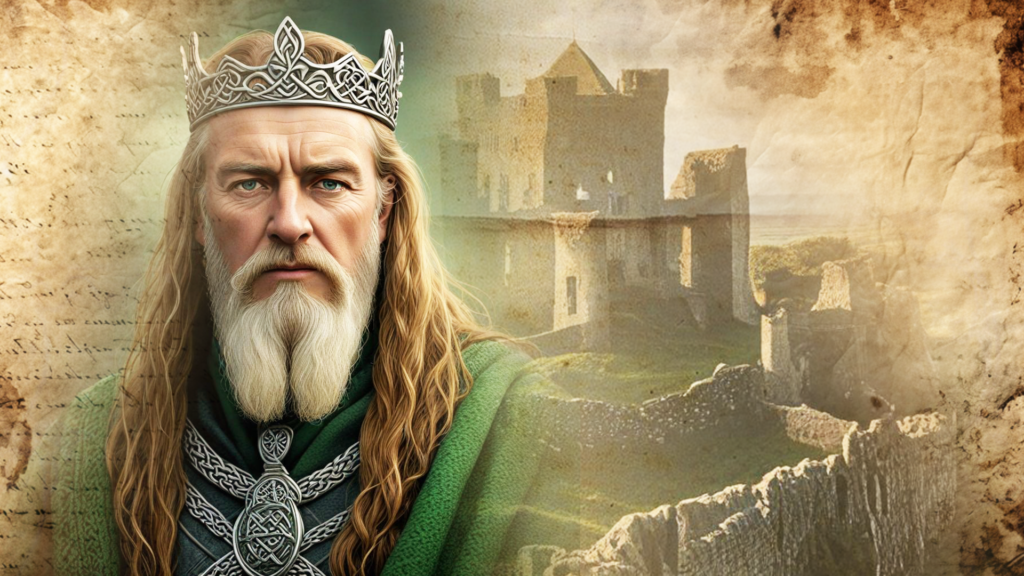
It was not until the mid-11th century that Tuam grew in prominence, as the O’Conor Kings of East Connacht established their headquarters in the city. Eventually, they defeated the O’Flaherty chieftains of West Connacht and became Kings of all Connacht. In 1111, Turlough O’Conor became the High King of Ireland, making Tuam the power centre of the 12th century. His support of the Irish Church led to the creation of Celtic art masterpieces during this time.
The O’Conor Kings, led by Turlough Mor O’Connor and his son Roderick, moved their headquarters to Tuam in the 11th century, strengthening the city’s governance. Roderick, a Christian convert and a strong supporter of the Church, later became the final High King of Ireland in 1166. However, he was unable to prevent the Anglo-Norman invasion, which resulted in King Henry the Second taking control. In 1171, King Henry the Second arrived to assert control over both the Anglo-Normans and the Irish, with the support of the Roman Catholic Church. Roderick then retired to a monastery.1
Tuam’s Cross: A Symbol of Governance and Faith
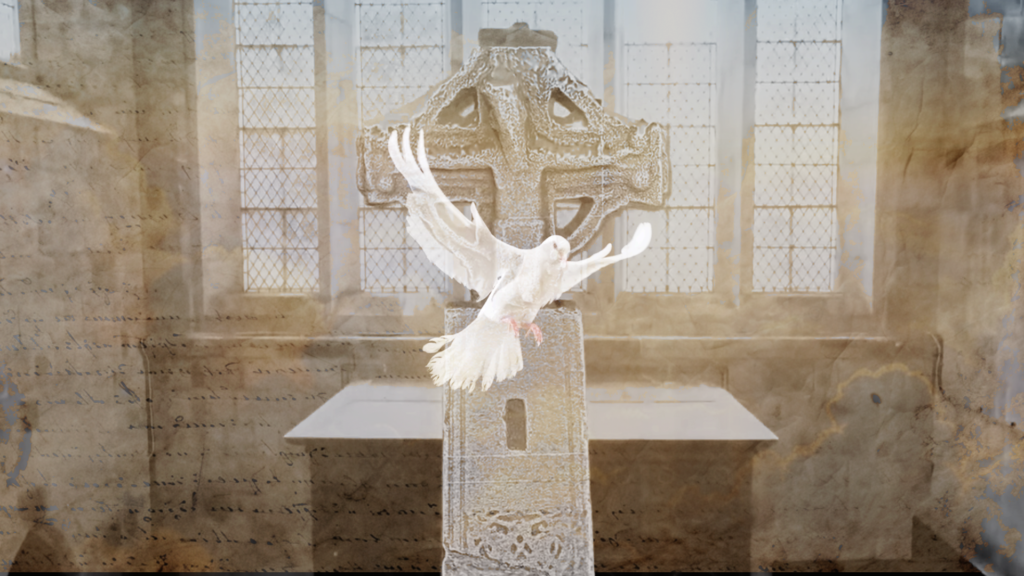
The craftsmen erected the High Cross of Tuam in 1152, making it Ireland’s tallest and most intricate cross, standing over 5 meters high. The Sandstone High Cross portrays Turlough and Archbishop Aodh O’hoisin at Tuam’s first cathedral, with a prayer for Turlough’s eternal rest. The original high crosses did not intend to mark burial sites but served instead as boundary markers for significant territories or sacred land, and as monuments to political power.
The imagery on the high crosses highlights the extensive knowledge of Irish monks and illuminates the primary teachings of the Bible. This impressive structure showcases scenes from the Old and New Testament, along with a prayer for King Turlough’s repose. Originally located in St. Mary’s Cathedral, the incomplete cross bears a Gaelic inscription. After the cathedral’s destruction in 1184, local antiquarian George Petrie rediscovered and restored the cross in the 19th century.
Its significance lies in its representation of medieval Irish art and architecture, highlighting the skill and creativity of craftsmen and the religious and cultural importance of Tuam as an ecclesiastical centre. In 1852, the Cross was brought to Dublin for an exhibition and faced disagreement between two churches before being returned to Tuam. Church of Ireland Dean Charles Henry Seymour believed it belonged to the Church of Ireland, while Catholic Archbishop Dr. John MacHale claimed it belonged to the Catholics. A compromise was reached, and they built the Cross in 1874 on the Town Centre’s Square.2
The Evolution of the Chair of Tuam and the Royal Charter
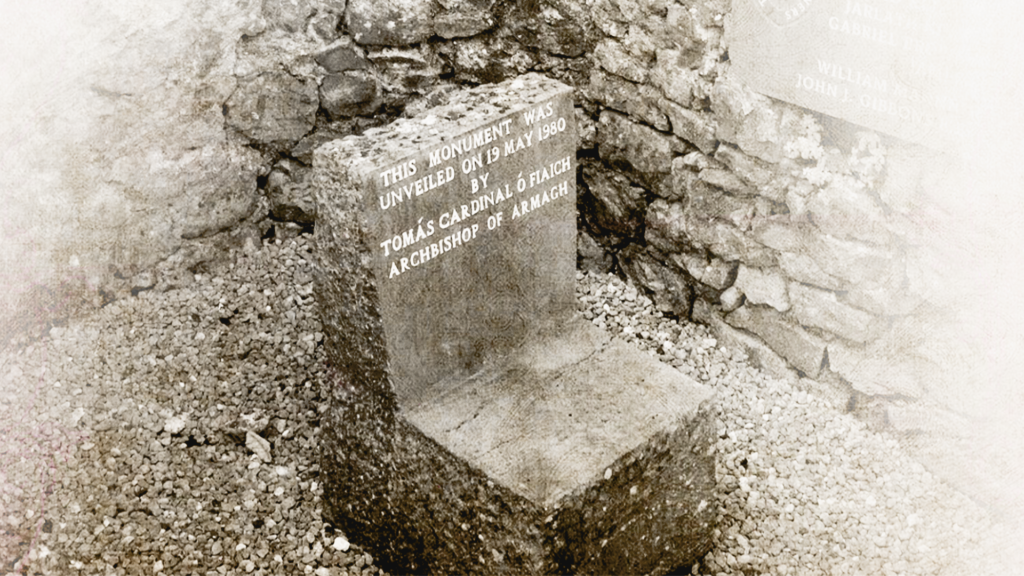
In 1613, James the First of England granted Tuam a royal charter, allowing Tuam to send two MPs to parliament. The town was also able to establish a proper municipal government under the Charter, which included the election of a sovereign and twelve burgesses. This body was the predecessor of the current Town Commissioners. The sovereign was sworn into office at the “Chair of Tuam” location, believed to be inside the last tower of Roderick O’Conor’s magnificent stone castle. In May 1980, the late Cardinal O’Fiach unveiled a new “Chair of Tuam” on this location.3
Two Cathedrals:The legacy of faith and history
Tuam is best known as a hub for both contemporary and historic church concerns, with its two cathedrals. St. Jarlath laid the town’s foundation in the sixth century by founding a monastery here. The ruins of Temple Jarlath, located in the city’s heart, date back to approximately 1360.
St. Mary’s Cathedral is the cathedral church for the Diocese of Tuam, located in County Galway, Ireland at Tuam. It served as the seat of the old Archdiocese of Tuam from the 12th century until 1839, before and after the Reformation. The majority of the current building was constructed in the 1870s, preserving interior elements from older 12th and 14th-century buildings to give the building a gothic and ceremonial appearance.
The Cathedral Church of the Assumption of the Blessed Virgin Mary, Tuam, also known as Tuam Cathedral, serves the Roman Catholic Archdiocese of Tuam in Ireland. The diocesan cathedral, originally St. Mary’s, was built on the site of an earlier structure in the fourteenth century before the English Reformation. Queen Elizabeth I of England named William Mullaly the new archbishop of Tuam for the Established church, causing the Roman Catholic clergy to lose possession of the cathedral. It took nearly three centuries to construct a substitute for the cathedral.3
The Cross of Christ: A Symbol of Love and Sacrifice
As Spirit Life Church, we believe that God’s will is to see Jesus Christ resurrected as the New Cross at the centre of Tuam. Just as the ancient High Cross monument represented governance and authority, we proclaim Jesus Christ as Lord and King of Tuam, presiding over a kingdom that prioritizes eternal salvation and the healing of its people. Christ died in our place, taking on the death we deserved and offering us His righteousness instead of our sinfulness. The cross symbolises the ultimate act of love, as Christ laid down His life for us, His church, out of love.
We now live in His place because He died in our place. Christ died in our place, taking on the death we deserved and offering us His righteousness instead of our sinfulness. The cross symbolises the ultimate act of love, as Christ laid down His life for us, His church, out of love. We now live in His place because He died in our place. The power of the cross of Christ reconciles humanity with our Heavenly Father. In Jesus we find forgiveness of sin. He was raised from death to give us a new life in Him. In the risen Lord Jesus, we are a new creation.
- The Cross is a new Beginning
- The Cross is a new Authority
- The Cross is a new Commitment
Take Up the Cross and Follow Him!
Spirit Life Church seeks to live and demonstrate the resurrection power of the Holy Spirit, Romans 8:11, NKJV. According to the Bible, a Believer each possess the same power that raised Christ from the grave. We have received that power from Christ because we are the Father’s children. No one needs to work for this power. You do not have to force yourself to obtain it. You already possess it. You have inherited it. The Lord is working in you through the Holy Spirit, Romans 10:9, NLT
Conclusion
- Spirit Life Church in Tuam is dedicated to elevating Jesus Christ as the centre of the town’s spiritual life and governance.
- Through prayer, commitment, and unity, the church aims to awaken a new faith in the hearts of the Irish people.
- The church emphasises the power of the Holy Spirit in the resurrection of Jesus Christ and the new life believers receive through Him.
Scott Sheridan
References
1.O’ Connor, Roderick, 18 July 2023, A historical and Genealogical Memoir of the O’connors, Kings of Connaught, and Their Descendants [With] Appendix
2. Rev Monsignor D’ Alton, P.P., LL.D., M.R.I.A., Member Governing Body University College, Galway, Ex-Senator National University of Ireland, History of the Archdiocese of Tuam,Volume 1. , 1928
3. Tuam Author: J.A. Claffey Editors: Anngret Simms, H.B. Clarke, Raymond Gillespie, Jacinta Prunty Consultant editor: J.H. Andrews Cartographic editor: Sarah Gearty Editorial assistants: Angela Murphy, Angela Byrne, Jennnifer Moore, Irish Historic Towns Atlas (IHTA), no. 20, published in 2009 by the Royal Irish Academy